TL;DR
When a CCTV survey shows a cracked, collapsed or root-damaged drain, the fix usually comes down to two options: no-dig pipe relining or traditional excavation. Relining is quicker and less disruptive in most cases, but it isn't always suitable, and the right choice depends on the pipe's depth, material, access and the extent of the damage rather than personal preference. Guessing which route to take without a proper diagnosis often leads to work being redone — get in touch online and we'll survey the pipe first, then recommend whichever repair actually fits the problem.
Reading the Damage: What a Survey Actually Shows
Before any repair decision gets made, the damage needs to be properly classified. Drainage engineers in the UK typically grade defects found during a CCTV survey against the WRc's Manual of Sewer Condition Classification (MSCC5), a widely used industry standard that scores things like fractures, deformation, root intrusion and displaced joints by severity. A pipe with a single hairline fracture is treated very differently to one with a full collapse or repeated root ingress along its length, and that grading is what actually determines whether relining is realistic or whether excavation is the only safe option.
This is also where age and material come into play. Older clay or concrete pipework, common in parts of Burton upon Trent's more established streets, tends to fail differently to modern uPVC, and a survey will usually flag whether the pipe run is even a suitable candidate for lining before any further decision is made. Root intrusion in particular tends to worsen gradually rather than appearing all at once, so a pipe graded as a minor defect one year can deteriorate significantly by the time symptoms like slow drainage or recurring blockages actually show up at the surface.
The survey report itself becomes a useful reference point too. Because it records the exact location, depth and grade of each defect, it can be kept on file and compared against a future inspection if a similar problem develops elsewhere along the same run, rather than starting the diagnosis from scratch each time.
Pipe Relining: The No-Dig Option
Pipe relining works by inserting a resin-saturated liner into the existing damaged pipe, which is then cured in place to form a new, structurally sound pipe within the old one. Because it doesn't require digging up a garden, driveway or floor slab, it's often the preferred option where the pipe run is otherwise sound but has localised cracking, root intrusion or minor displacement. It's particularly useful under patios, mature trees, or shared access routes where excavation would be impractical or would disturb a neighbouring property.
Relining isn't a fix for every situation, though. A pipe that has fully collapsed, is significantly out of alignment, or has multiple severe defects along its length usually can't be relined effectively, because there's no sound structure left for the liner to bond to.
Drain Excavation: When Digging Is Unavoidable
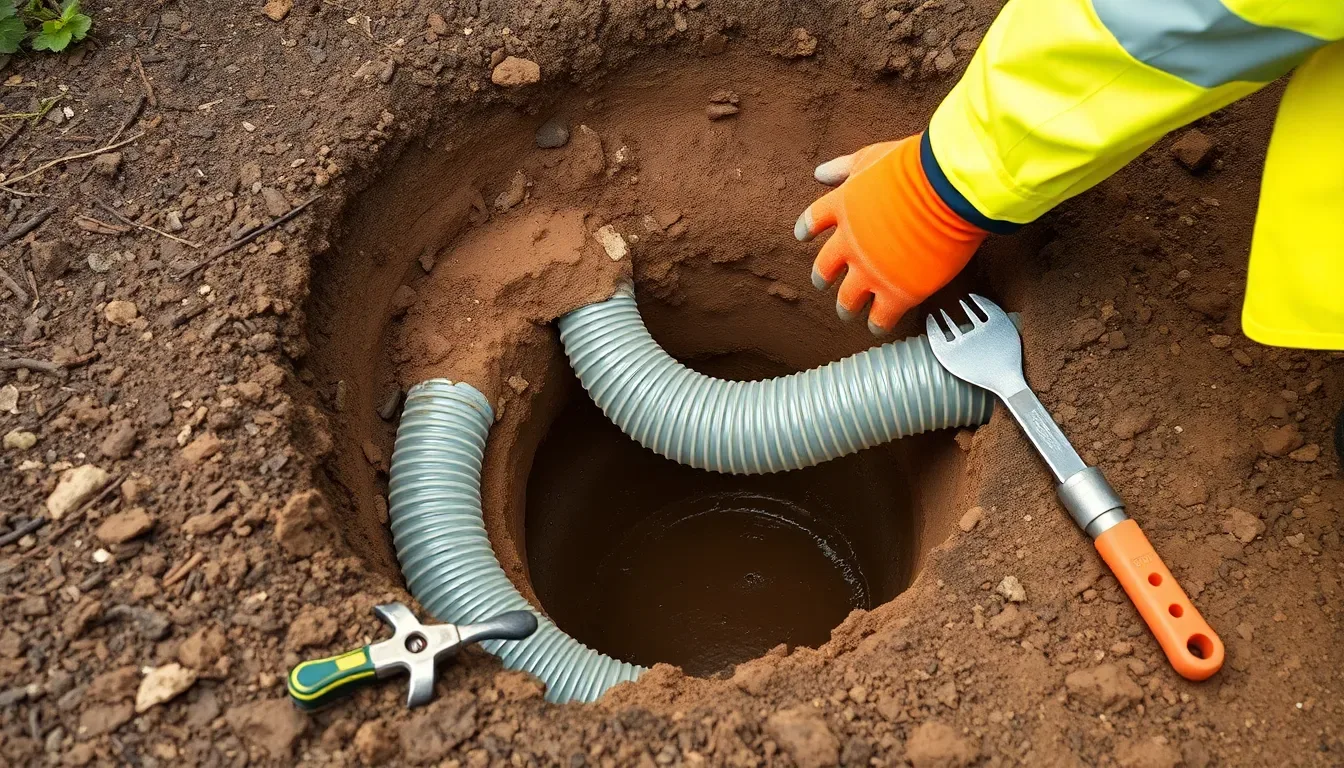
Drain excavation involves digging down to expose the damaged section of pipe and replacing it outright. It's more disruptive and takes longer than relining, but it's the only realistic option where a pipe has collapsed, shifted significantly out of position, or been so extensively damaged by tree roots that no liner could restore it. Excavation also becomes necessary where the pipe needs to be rerouted entirely, rather than simply repaired in its existing position.
For properties near mature trees or older boundary walls — not uncommon around parts of Branston and Stretton — root damage severe enough to warrant excavation is something we see fairly regularly, which is exactly why a survey comes before any commitment to a particular repair method.
Excavation work also brings practical considerations that relining avoids, such as reinstating a driveway surface, lawn or planting once the pipe itself has been replaced, and coordinating access if the affected run passes close to a boundary or a shared path. None of that makes excavation the wrong choice where it's genuinely needed — it simply means the wider job, not just the pipe repair itself, needs to be planned for.
What Actually Drives the Right Choice
There's no single "better" option between relining and excavation; the right choice depends on a combination of factors specific to the pipe in question. Depth and access matter — a shallow, easily reached pipe is a very different job to one running deep under a solid extension. Pipe material and age affect how well a liner will bond. The number and severity of defects, as graded during the survey, often rules one method out entirely. And the surrounding surface — whether it's an open garden, a paved driveway or a structural slab — changes how disruptive excavation would actually be.
Timing plays a part too. A defect caught early, while it's still graded as minor, has a much better chance of being a straightforward relining job than one left until it's deteriorated into a full collapse. That's one of the main arguments for having a survey done as soon as symptoms appear — slow drainage, a persistent smell, or a patch of damp ground near a pipe run — rather than waiting until the problem forces the issue.
Because these factors vary so much from one property to the next, we don't quote a fixed price without seeing the survey footage first. Once we know exactly what we're dealing with, you can request a fixed-price quote online for whichever repair method actually applies.
Getting an Accurate Diagnosis First
Every repair recommendation we make starts with a proper CCTV drain survey, because trying to decide between relining and excavation without seeing inside the pipe is little more than a guess. The survey identifies exactly where the damage sits, how severe it is against recognised classification standards, and what the surrounding ground conditions look like, which together determine which repair method is actually viable.
We cover drain repairs across Burton upon Trent and the surrounding area, including Derby, Lichfield and Tamworth — see our full coverage area to check whether we work near you. If you've got a recurring drain problem, damp patches near a pipe run, or a survey report you'd like a second opinion on, get in touch online and we'll talk you through what a fix would actually involve before any work is booked in.